
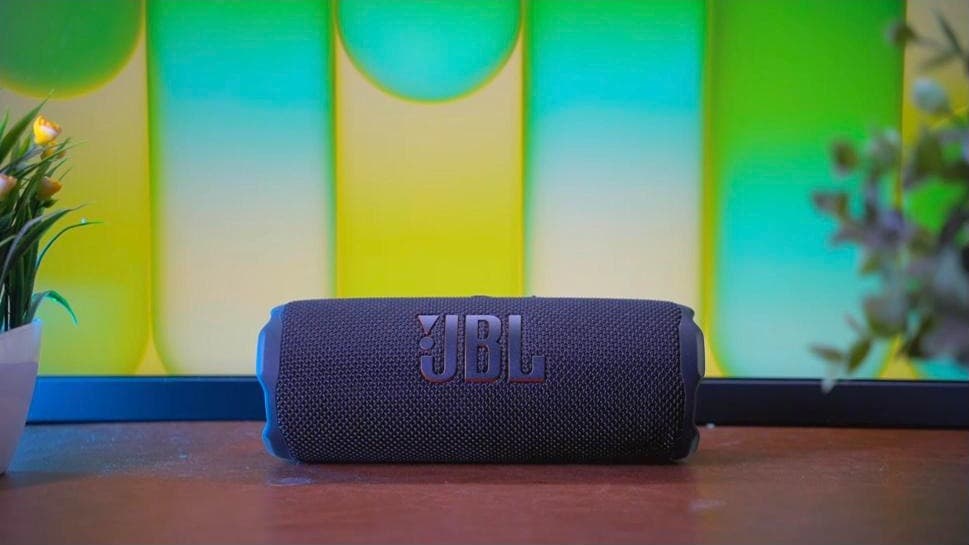
JBL Flip 7 Review: Outstanding Sound, But Only Worth It at the Right Price
The JBL Flip 7 delivers deep bass and room-filling volume with IP68 protection — but at its regular price, it's a hard sell over the cheaper Flip 6.
I picked up the JBL Flip 7 during a Republic Day sale — caught it at a significant discount with a card offer stacked on top — and after a full month of daily use across genres, commutes, and late-night listening sessions, I have a very specific verdict: this speaker is genuinely excellent, but only if you can catch it at the right price.

JBL Flip 7 Portable Bluetooth Speaker
The JBL Flip 7 is a compact IP68-rated portable Bluetooth speaker delivering 35W RMS through a woofer-tweeter driver setup with JBL's signature warm bass. It suits solo listeners and small outdoor groups who want proven waterproofing, Auracast multi-speaker expansion, and a seven-band EQ via the JBL Portable app — best value when caught at a sale price rather than the regular listing.
JBL Flip 7 Build Quality and Design: Rugged Where It Counts
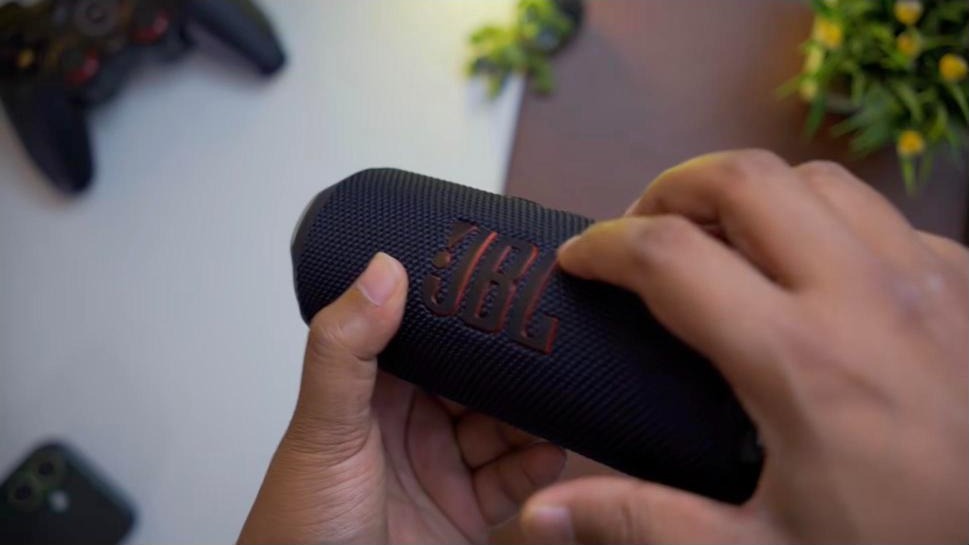
The first thing that strikes you about the Flip 7 is how solid it feels in the hand. The outer body is wrapped in a rubber structure that gives the whole unit a rugged, almost tactical look — and more importantly, it actually protects the speaker if it takes a tumble. JBL's branding sits prominently on the front, and the black variant I ordered has a subtle orange accent strip on the side that keeps it from looking too plain.
On top, you get five buttons: power on/off, Bluetooth pairing, an Aura Cast broadcast button, and separate volume and play/pause controls. The layout is clean and tactile — you can operate all of them by feel without looking down. Around the back is a single USB-C port for charging.
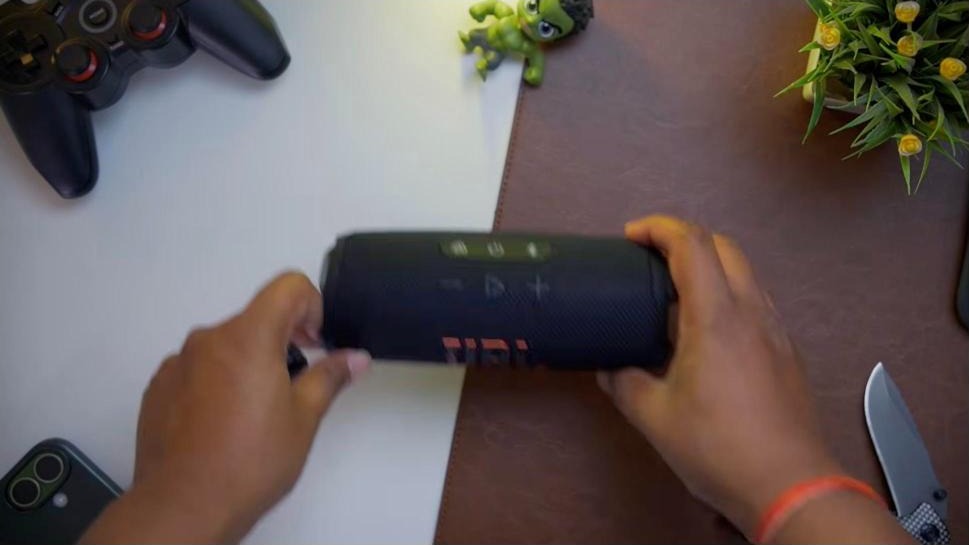
Aura Cast is a Bluetooth broadcast technology that lets the Flip 7 link with multiple compatible speakers at once — think a party system spread across several JBL devices, not just a single pair. There's a dedicated button for it on the top panel, which the older Flip 6 didn't have.
The strap attaches like a car seatbelt — you click it in with a firm, satisfying snap and it locks securely. It's a revised mechanism compared to older Flip models and works equally well whether you're carrying it over your shoulder outdoors or propping the speaker upright on a desk at home.
Two passive radiators sit on either side of the cylinder. Passive radiators are essentially speaker cones without a motor — they vibrate in response to the main active driver and extend the bass response without requiring a physically larger cabinet. In plain terms: they're a big reason this relatively compact speaker can produce bass that punches well above its size.
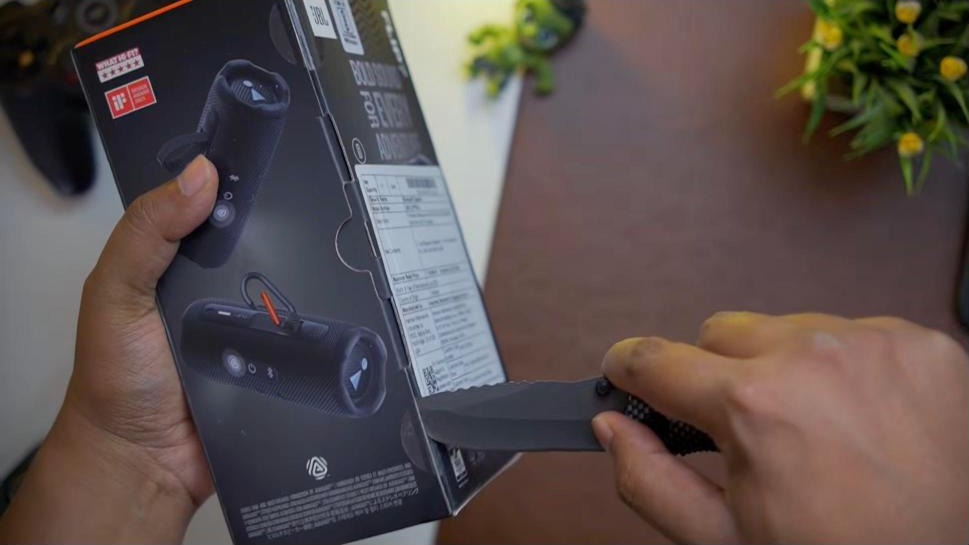
A couple of genuine misses worth calling out. There is no protective covering on the speaker out of the box — not a pouch, not a foam wrap, nothing. Even budget speakers from smaller brands typically include something. For a product at this price tier, it's a noticeable gap. Similarly, no charging cable is included. Standard practice now, but still worth knowing before you order so you're not scrambling for a USB-C cable on day one.
The IP68 rating is a proper differentiator. IP68 means the Flip 7 is fully dustproof and can be submerged in water beyond one metre for extended periods — poolside, beach, rain, and general outdoor roughness are all genuinely no problem. Several colour options are available beyond the standard black, though you'll pay a premium for the more vibrant finishes; black is JBL's most affordable variant in the Flip 7 lineup.
JBL Flip 7 Sound Quality: Deep Bass and Impressive Clarity Across Every Genre
This is where the Flip 7 earns its reputation, and where I spent the most time testing.
The speaker delivers 25W RMS output. RMS — Root Mean Square — is the continuous, sustained power a speaker can reliably produce, as opposed to a peak figure that lasts only a fraction of a second. In practice, 25W RMS is genuinely loud for a portable Bluetooth speaker and holds up outdoors without sounding thin or strained.
I tested across country, pop, hip-hop, rock, acoustic, and instrumental tracks, running the volume between 50% and 70%. I deliberately stopped at 70% for indoor sessions — at that level it already filled my room comfortably. Going above 90% for extended indoor listening risks disturbing neighbours and simply isn't necessary; the volume at 70% is substantial.
The standout genre for me was rock. The Flip 7 maintains exceptional clarity on dense, layered tracks — instruments stay separated and the midrange doesn't turn muddy even as the volume climbs. Many Bluetooth speakers in this segment start compressing the high frequencies (the bright, sharp sounds at the upper end of the audio spectrum) as volume rises, making everything sound harsh and fatiguing. The Flip 7 avoids this noticeably.
The bass deserves a separate mention. JBL's signature has always been a warm, deep low-end, and the Flip 7 continues that lineage convincingly. The passive radiators on both sides produce bass with genuine depth — not the exaggerated, boomy quality you hear from speakers that artificially boost a narrow low frequency band, but a natural, full bass response that makes acoustic guitar and kick drums feel physical.
For late-night or soothing listening, try the JBL Signature EQ preset at 30–40% volume. The tonal balance holds up well at lower levels, and acoustic, instrumental, and classical tracks in particular sound very natural at that setting.
Distortion — the harshness or breakup you hear when a speaker is pushed past its comfortable limit — stays minimal up to around 90% volume. You'll hear a slight edge creeping in at 100%, but given that 70% is already very loud indoors, that ceiling is rarely reached. Outdoors, where ambient noise absorbs some of the output, the driver performs with even less audible distortion.
One important structural note: the Flip 7 is a mono speaker by default. There is one active driver on the front face, supported by the two passive radiators on the sides. It does not produce left-right stereo separation on its own. If true stereo matters to you, you'd need to pair two compatible speakers via Aura Cast — they split the stereo channels between them and create a proper left-right audio image.
JBL Flip 7 Connectivity, Range, and App Features Explained
Bluetooth 5.4 handles the wireless link. The very latest standard is Bluetooth 6.0 — the Flip 7 sits one generation behind. In real-world use this makes no meaningful difference to connection stability or audio quality, but it's worth noting given how recent this speaker is.
In practical range testing across a 3BHK apartment, I got a clean 8–9 metres with no dropouts. You can leave the speaker in one room, walk to another with your phone, and music keeps playing without interruption. Larger homes — particularly if you're trying to connect from one far corner to another — may see the signal start to waver at the edges of that range.
Dual connectivity is well-implemented. You can pair the Flip 7 to your phone and laptop simultaneously. If music is playing from the laptop and a call comes in on the phone, the speaker automatically prioritises the call — music pauses and the caller's voice comes through the speaker. The built-in microphone lets you take the call hands-free without picking up your phone, and it handles calls cleanly.
The JBL Portable app adds meaningful control once you're set up. The EQ (equaliser — the tool that adjusts the balance between bass, midrange, and treble frequencies) alone is a significant upgrade over the previous generation. The Flip 6 gave you three adjustment points; the Flip 7 offers a full seven-band custom equaliser. That precision means you can nudge the bass back if your room is acoustically heavy, lift the midrange if vocals sound recessed, or simply use one of the four preset modes: JBL Signature, Chill, Energetic, and Custom.
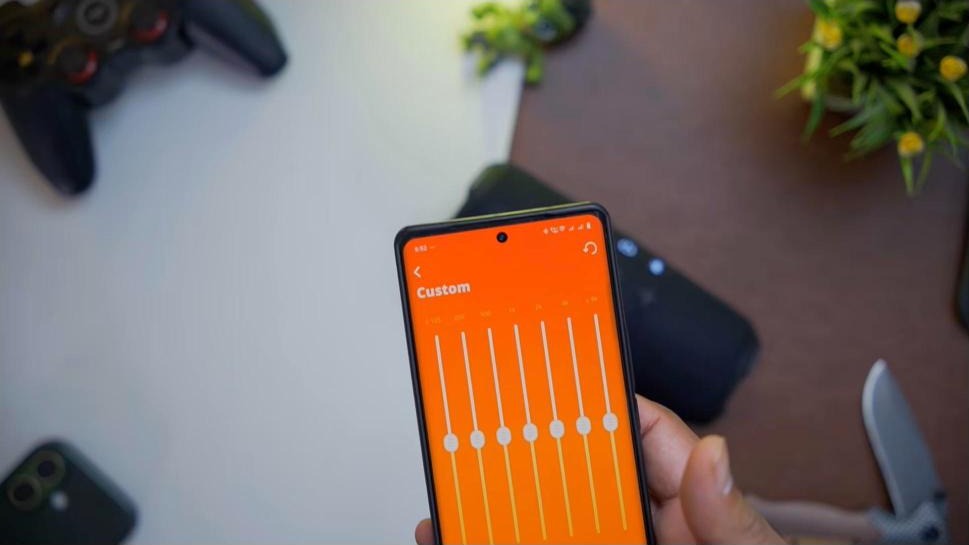
I used the JBL Signature preset for the majority of my testing month and found it well-balanced across all genres without any adjustment. The Custom EQ is there if you want it, but the factory preset is genuinely good starting point.
The app also shows battery percentage in real time and flagged a firmware update shortly after I unboxed the speaker. The update completed in three to four minutes with a series of audible confirmation tones from the speaker. Post-update, everything felt stable and I noticed no issues.
Party mode lets you connect multiple JBL speakers together for a shared audio experience — useful if you're heading somewhere with friends who also have JBL speakers in the lineup. I didn't test this personally, but the Aura Cast button on top handles the pairing initiation directly from the speaker itself without needing the app open.
JBL Flip 7 Battery Life: Decent, But Not the Class Leader
JBL claims 16 hours of playback — broken into 14 hours of standard output and an additional 2-hour boost mode. Real-world results vary significantly by volume.
Here's what I actually observed: at 30–40% volume for roughly one hour of daily listening, the Flip 7 lasted close to three weeks before needing a charge. That's a generous result, and it reflects the reality that most indoor listening happens at moderate levels where 30–40% is already comfortable. If you're pushing it loud outdoors for extended hours, expect the 16-hour claim to be the ceiling rather than a consistent average.
Charging speed is a genuine strength. I timed a charge from around 5% to full at just under two hours. For a speaker with a battery this size, that's fast. Even if you forget to charge overnight, a two-hour top-up while you work gives you a full tank.
Battery life is the one area where the Flip 7 doesn't lead its segment. There are competing Bluetooth speakers at similar or lower price points — including options from other brands — that offer noticeably longer single-charge runtimes. The Flip 7 compensates with its fast charging support, but if maximum battery endurance is your priority, it's worth comparing numbers before you commit.
✓ Pros
- ✓Deep, punchy bass with strong clarity at volume
- ✓IP68 waterproof — safe for pool, beach, and rain
- ✓Pairs to two devices; calls take priority over music automatically
- ✓Seven-band EQ, up from three bands on the Flip 6
- ✓Charges to full in around two hours
✕ Cons
- ✕Hard to justify at regular price — Flip 6 sounds nearly identical for less
- ✕No charging cable in the box
- ✕No carry pouch or protective covering included
- ✕Mono by default — stereo needs a second speaker via Auracast
The JBL Flip 7 is the right speaker for anyone who wants serious bass output, genuine outdoor durability, and multi-device flexibility in a compact cylindrical form — provided they can catch it at a sale price. When it drops to the ₹8,000–9,000 range during discount events, the combination of 25W output, IP68 waterproofing, seven-band EQ, and fast two-hour charging is difficult to argue with. The sound quality is excellent, and rock and instrumental music listeners will particularly feel the difference in clarity and depth. The honest trade-off is the regular listing: at ₹12,000–13,000, the JBL Flip 6 delivers comparable audio for considerably less, and Marshall speakers offer a more premium aesthetic and better battery life for a modest premium above that. Set a price alert, wait for a sale, and when it drops to the ₹8,000–9,500 window — pick it up without hesitation.
FAQ schema emitted for Google rich results

Vishal Pratap
A technical writer by profession, a video creator by hobby, and a photography enthusiast.
Watch on YouTube →Related Articles
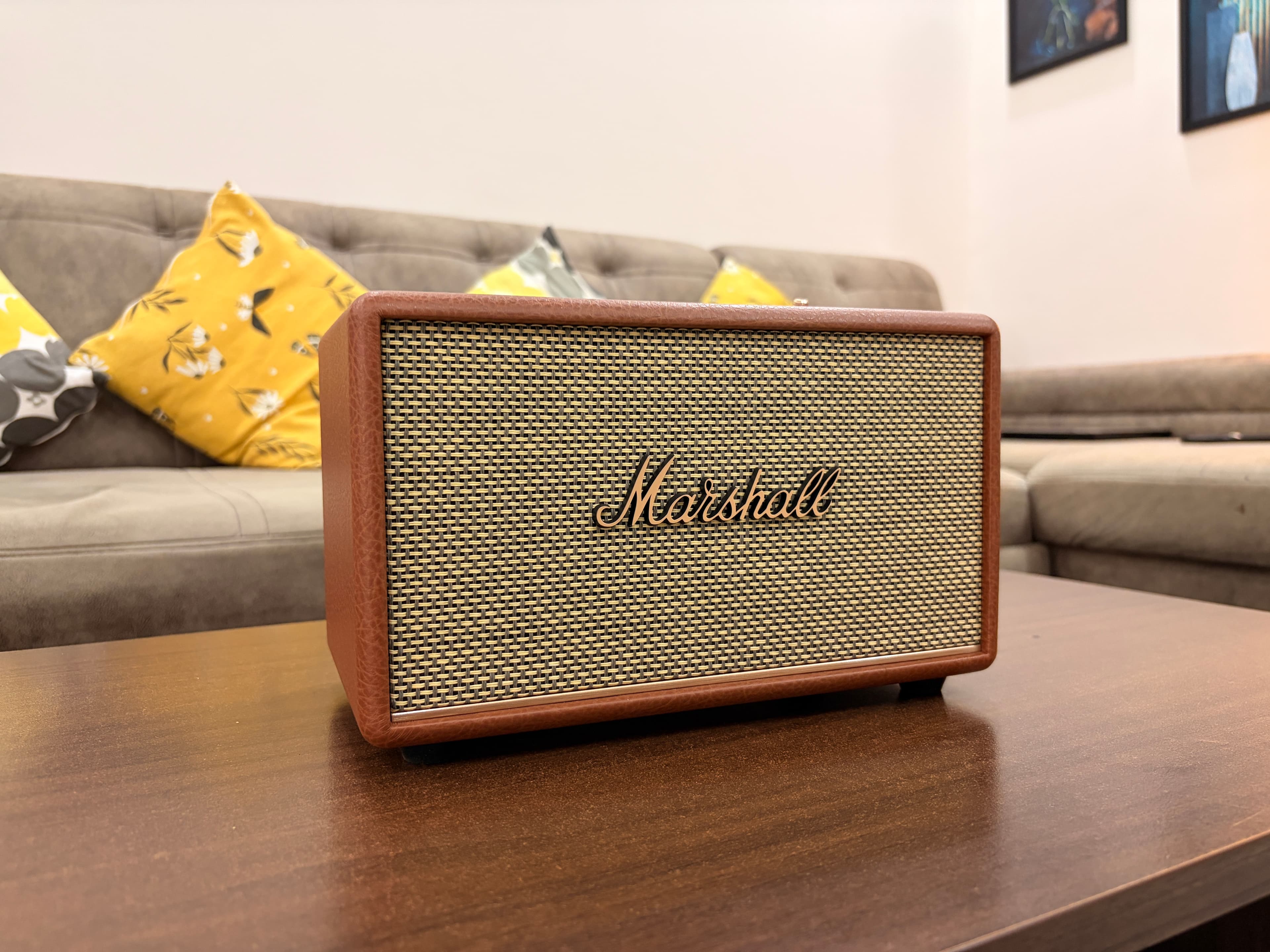
Marshall Acton III Review: Outstanding Sound, Stunning Design — Worth Every Rupee at a Sale Price
The Marshall Acton III delivers concert-level clarity and punchy controlled bass in a vintage package — best caught at a sale price, but hard to argue with either way.
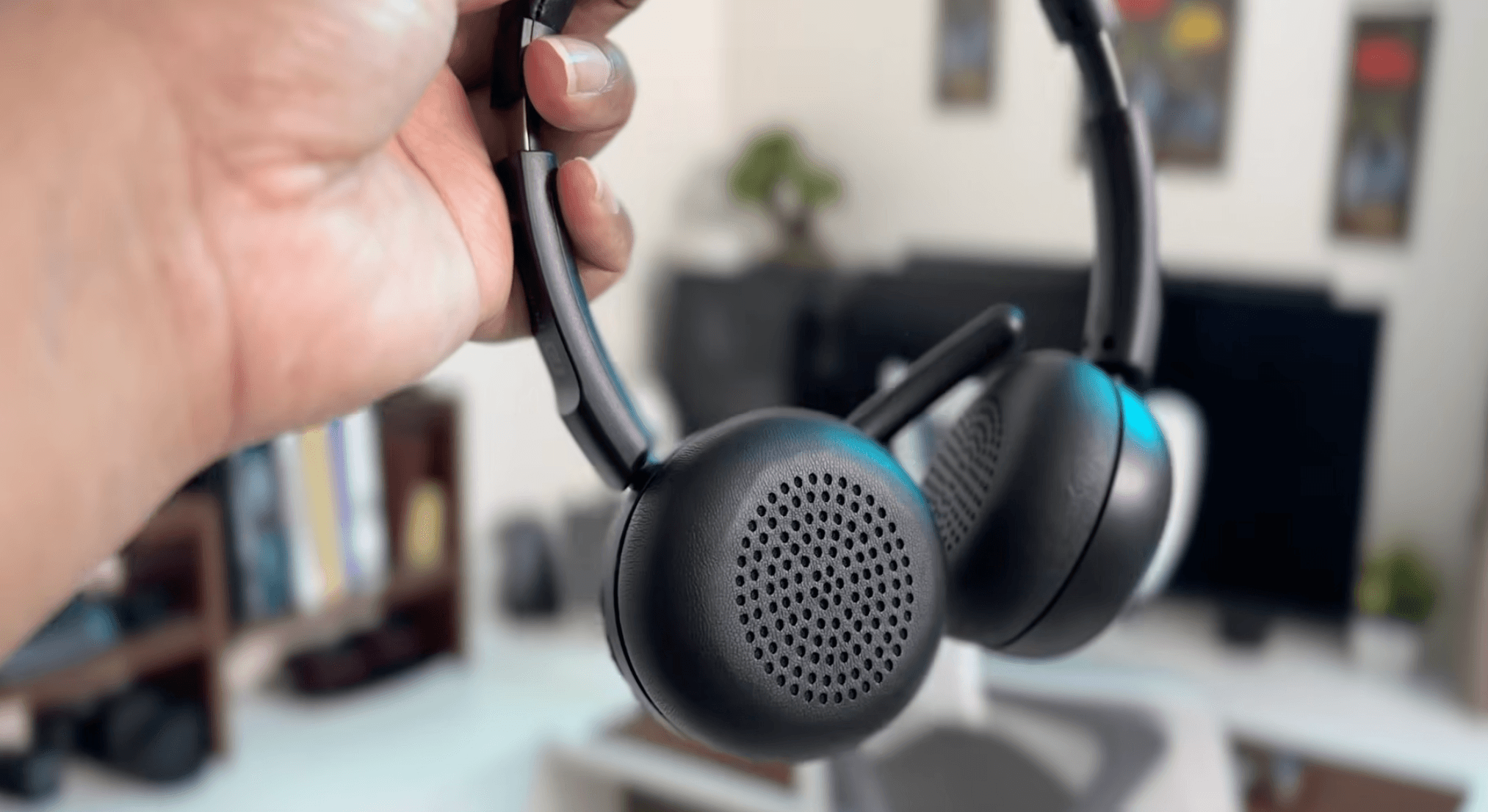
Portronics Muffs A3 Review: The Best Wireless Boom-Mic Headphone at ₹1,500 — With Some Real Trade-offs
The Portronics Muffs A3 is the only wireless boom-mic headphone under ₹2,000 — solid for Zoom calls, but comfort and call quality have real limits.
MacBook Air M5 Too Expensive? These Copilot+ Laptops Are Worth the Switch (India, 2026)
Apple raised MacBook Air M5 prices in India by ₹30,000 overnight. These five Copilot+ thin-and-lights now make a stronger case than ever — OLED displays, AI hardware, and all-day battery at significantly lower prices.